
Efforts to normalise trading relations expected during the first such meet on Saturday

The Department of Investment and Public Asset Management (Dipam) has asked ministries, government departments, and public sector undertakings (PSUs) to send a list of assets that can be monetised under the proposed National Monetisation Pipeline. The list will be used for creation of an asset monetisation dashboard, which will keep a track of such assets. The government, meanwhile, has asked CRISIL to prepare a road map for monetising assets of PSUs and government departments.

Infrastructure assets worth over Rs 1.62 lakh crore are expected to be monetised during the current fiscal, Parliament was informed on Monday. The government had last year announced a Rs 6 lakh crore National Monetisation Pipeline (NMP) to unlock value in infrastructure assets across sectors, ranging from power to road and railways in four years till 2025. In a written reply to the Lok Sabha, Minister of State for Finance Pankaj Chaudhary said about Rs 97,000 crore worth of public assets were monetised in the last fiscal (2021-22).

'Interim Budget has ignited the entrepreneurial spirit.'

A six-inch pipe has been laid at the Silkyara tunnel through which nutritious food and medicines could be supplied to the 41 labourers, trapped for over a week after parts of the under-construction structure collapsed following a landslide.

Reliance Industries, construction major L&T and IRB Infrastructure are some of the top companies that have used an infrastructure investment trust structure to reduce part of their debt and generate returns for their investors. Earlier this month, IRB Infrastructure InvIT was listed on the National Stock Exchange, giving its investors an option to exit by selling their units. The listing came within months of the Securities and Exchange Board of India's (Sebi's) guidelines for conversion of private unlisted InvITs into listed ones were issued.

The stock of the country's largest passenger vehicle maker, Maruti Suzuki India (MSIL), has been hitting successive all-time highs over the past three trading sessions. The rally in the scrip has helped it notch over a 21 per cent gain since the start of February, outperforming the National Stock Exchange Nifty Auto Index. The gains for the leader of small passenger cars have been more recent, as the company still trails the Nifty Auto over one- and two-year periods.

The government has fixed an indicative value for Delhi's iconic 'The Ashok' hotel at Rs 7,409 crore under the national monetisation programme, according to sources. The Ashok and the adjacent hotel Samrat are among the eight India Tourism Development Corp assets listed under the National Monetisation Pipeline (NMP) announced by Finance Minister Nirmala Sitharaman last year. The sources said investor consultation has already been undertaken and a cabinet note for the sale of the sprawling 25-acre property in the heart of the national capital is under consideration.

The ministry of railways has dropped its proposal for monetisation of stations on public-private partnership mode, and projects are now being taken up under engineering, procurement and construction (EPC) mode, a source said. The source also told PTI that the ministry of railways has been asked to expedite monetisation of other assets, including trains, goodsheds, hill rail, stadiums, railway colonies and railway land parcels among others. "Largest asset class (stations) dropped. Stations earlier proposed on PPP mode are now being taken up under EPC mode," the source said.
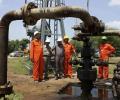
State-owned Oil and Natural Gas Corporation (ONGC) has cancelled the bids received for its Daman upside gas development project off the western coast due to high price quotes, sources said. The project is crucial to ONGC's strategy of ramping up gas production from its shallow-water fields off India's west coast. Once completed, the project would lead to nearly doubling of current gas production of 4-5 million standard cubic metres per day.

Adani Enterprises, the flagship of Adani Group, said on Wednesday new businesses of renewables, data centres, airports and roads account for more than 33 per cent of earnings and it will complete all infrastructure projects on time. "We are laser focused on continuing our business momentum, in this market volatility. "We are confident in our internal controls, compliance and corporate governance.


Major General S C N Jatar, who passed into the ages on Monday night, thwarted anti-national forces at the peak of the Assam agitation. Colonel Anil A Athale (retd) salutes this officer and gentleman.

Capital goods companies in their Q2FY24 results are expected to report another steady quarter of earnings growth as order inflows and execution remain healthy, according to analysts. An upward revision in order inflow targets and a margin improvement due to lower raw material costs are also anticipated. "We expect the execution of all capital goods companies and most EPC (engineering, procurement, and construction) companies to remain healthy Y-o-Y (year-on-year), led by strong order book accretion in the past 5-6 quarters," wrote analysts at Kotak Securities in a note, estimating revenue growth of 32 per cent for India's largest company in the capital goods space -- Larsen & Toubro.

The second cyber attack on AIIMS took place just last fortnight, but the hospital's cyber security systems were able to successfully thwart this attempt.

As the world celebrated International Day of Persons with Disabilities (PwD) on December 3, corporate India has kept up with efforts to make workplaces more inclusive and accessible. Organisations across sectors are taking initiatives such as equipping offices with practical work tools like Braille-friendly and voice-enabled lifts and screen readers. While inclusion has gained pace, only 11.3 per cent (or 3.4 million out of 30 million) Indians with disabilities have jobs.

'We do not see people getting reduced, but because of automation, we will do more work.'

Capital expenditure (capex) by 54 large central public sector enterprises (CPSEs) and five departmental arms with an annual capex target of Rs 100 crore and above has reached around 42.5 per cent of their annual target of about Rs 7.33 trillion in this financial year so far, a senior official from the Ministry of Finance told Business Standard. "The Centre is pushing the big public undertakings in the infrastructure and refinery sector to achieve 90 per cent of their target by the end of the third quarter," he said. The capex by this group of CPSEs stands at around Rs 3.1 trillion in the April-August period so far.

India's production-linked incentive (PLI) scheme, which aims to make domestic manufacturing globally competitive, has attracted investment worth over Rs 45,000 crore and has also created three lakh jobs, NITI Aayog CEO Parameswaran Iyer said on Monday. The government has rolled out the scheme with an outlay of about Rs 2 lakh crore for as many as 14 sectors, including automobiles and auto components, white goods, pharma, textiles, food products, high efficiency solar PV modules, advanced chemistry cell and speciality steel. "The PLI programme has already started showing results.
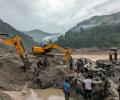
The Sikkim Government has confirmed that 14 people have died so far in the flash floods that occurred in Sikkim in the early hours of Wednesday.

The government, under the Finance Act, 2020, had allowed tax exemption for SWFs and pension funds in the case of incomes from investment in 34 key infrastructure sectors, including hotels, cold chains, educational institutions, hospitals, and gas pipelines.

The Delhi high court on Thursday said the existing medical infrastructure in the national capital was 'exposed' and in 'shambles' when put to the test during the pandemic and directed the Delhi government to provide facility for medical treatment as required by all residents of the national capital who are suffering from COVID-19.

India's inclusion in JP Morgan's bond index can channel billions of dollars into India. How will the government securities market handle it?

An obscure US-based firm with just 19 employees, USD 15 million in revenue and hosting just a one-page website, wants to invest USD 500 billion in equity into India's National Infrastructure Pipeline (NIP).

'Inter-ministerial coordination, information on the proposed PSUs, and due diligence are taking longer than expected to conclude the process.'
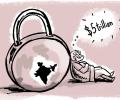
In order to achieve $5 trillion GDP by FY'25, India needs to spend about $1.4 trillion over this period on infrastructure, according to the Economic Survey. During financial years 2008-17, India pumped in about $1.1 trillion on infrastructure. However, the challenge is to step up infrastructure investment substantially, the Economic Survey 2021-22 said.

Expressing commitment to augment the country's infrastructure, Finance Minister Nirmala Sitharaman on Monday proposed to significantly enhance capital expenditure to Rs 5.54 lakh crore in the next fiscal, besides creating institutional structures and giving a big thrust to monetizing assets to achieve the goals of the National Infrastructure Pipeline (NIP). Sitharaman said NIP, that was launched in December 2019 with 6,835 projects, has now been expanded to 7,400 projects and around 217 projects worth Rs 1.10 lakh crore under some key infrastructure ministries have been completed. "For 2021-22, I propose a sharp increase in capital expenditure and thus have provided Rs 5.54 lakh crores which is 34.5% more than the BE of 2020-21," the finance minister said.

The country's largest software company Tata Consultancy Services (TCS) on Wednesday said its net profit increased 8.7 per cent year-on-year to Rs 11,342 crore in the September 2023 quarter. The Tata Group flagship had reported a net profit of Rs 10,431 crore in the year-ago period.
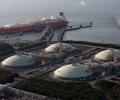
Around 15 years ago, when Reliance Industries (RIL) struck natural gas in the Krishna-Godavari (KG) basin off the east coast, the government made plans to supply that fuel cheaply to scores of generators that sprang up in India triggered by the discovery. Most of the plants, which account for 6 per cent of India's total generation capacity, operate sparsely after the KG-D6 area first failed to meet production targets, and then finally shut shop. Affordable domestic gas was why those thermal plants came up and the rate of the fuel today is why those generators hardly operate. Record liquefied natural gas (LNG) rates may yet again unravel India's ambitions to expand use of gas in industries, households and vehicles. Rates, while volatile, may stay strong this decade as developed nations with higher purchasing power embrace gas as the transition fuel.

The Cabinet has cleared a Bill to set up a government-owned development finance institution (DFI) with initial paid-up capital of Rs 20,000 crore so that it can leverage around Rs 3 trillion from the markets in a few years to provide long-term funds to infrastructure projects as well as for development needs of the country. To put it in perspective, Rs 3 trillion constitutes slightly less than 3 per cent of the Rs 111 trillion to be spent on over 7,000 projects in the National Infrastructure Pipeline from 2019-20 to 2024-25. Besides, the government will give Rs 5,000 crore as grant to the institution, Finance Minister Nirmala Sitharaman on Tuesday told the media after the Cabinet meeting.

Mergers and acquisitions (M&As) in India are expected to stay buoyant, seen over the last three-four years, despite a slowdown in the first seven months of the calendar year. "M&A is a lumpy business activity, and we may suddenly see large deals taking place during the next two quarters of the calendar year. "This would help maintain the streak of strong M&A activity.

A video shows that Shehbaz was asking an aide for help, however even after the aide's assistance, his headphones dropped once again.

'India is the sixth-largest market for the Kia Corporation, and contributes 8 to 9 per cent to our global sales.' 'We are eyeing 10 per cent market share over the next few years depending on customer demand and new product innovations.'

'They are also sitting on huge public sector assets without many returns.'

Hemant Shivsaran lists the number of projects the Modi government has announced since August to woo Gujarat voters.

As spending on infrastructure has three times the desired impact, the government's Rs 111 trillion National Infrastructure Pipeline should be accelerated: Assocham president, Vineet Aggarwal
It would be a difficult task for the Indian economy to reach the $5-trillion mark a year before the International Monetary Fund (IMF) projection of 2026-27. Pankaj Chaudhary, minister of state for finance, said in the Rajya Sabha on Tuesday that the government is taking steps to make the country a $5-trillion economy at a date earlier than the IMF's projection. In that context, it would not be difficult to meet the projection in the third quarter of FY27.

'All Shatabdis and Rajdhanis should be converted to this type of high-speed train.' 'There should be a sleeper version of the train.' 'Right now, there is only a day version of the train.' 'Unless you develop a sleeper version, it will not be possible to replace the Rajdhani.' 'Work on the sleeper version was stopped for some reason. It should be revived now.'

This includes an infrastructure push which may lead to the government spending more than its budgeted capital expenditure for 2020-21. There are also discussions on increasing the scope and quantum of direct cash transfers to the beneficiaries who need it the most.
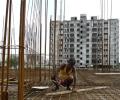
Jaypee, Essar, GMR, GVK, Lanco, Abhijeet groups debt rise despite falling cash flow, says UBS
